Endpoint Protection Explained: Why Your Business Devices Are the New Front Door
If you think your network perimeter is still defined by the four walls of your office building, it's time to have a conversation with the intern who just connected to your CRM from a coffee shop in Austin. Endpoint protection explained in its simplest form is this: every laptop, smartphone, tablet, and server that touches your business data is a potential entry point for attackers. In 2024, the FBI reported over $2.7 billion in losses from business email compromise alone, underscoring that cybercriminals are relentlessly targeting businesses of every size . And in 2026, with hybrid work as the default, that's a lot of doors. Over 70% of successful cyberattacks now start at the endpoint, making endpoint security not just an IT concern, but a core business imperative .
For US-based businesses, the stakes are particularly high. The average cost of a data breach continues to climb, with figures that don't even account for the reputational damage or the sleepless nights of explaining to clients why their data is now on a dark web auction block.
What Is Endpoint Protection, Really?
At its core, endpoint protection is a comprehensive security strategy designed to secure every device that connects to your network. It's a far cry from the "set it and forget it" antivirus software of yesteryear, which often gave businesses a false sense of security—like putting a "Beware of Dog" sign on a mailbox. Modern endpoint protection, or Endpoint Protection Platforms (EPPs), use a multi-layered approach to prevent, detect, and respond to threats in real-time .

It's the difference between a security guard who just checks ID cards (antivirus) and a fully staffed security operations center with AI-powered threat hunters (endpoint protection). It watches behavior, catches anomalies, and automatically responds to threats before they can spread. For a business owner, that means it's actively trying to prevent your Friday afternoon from being ruined by a ransomware note.
How Endpoint Protection Works: A Four-Stage Defense
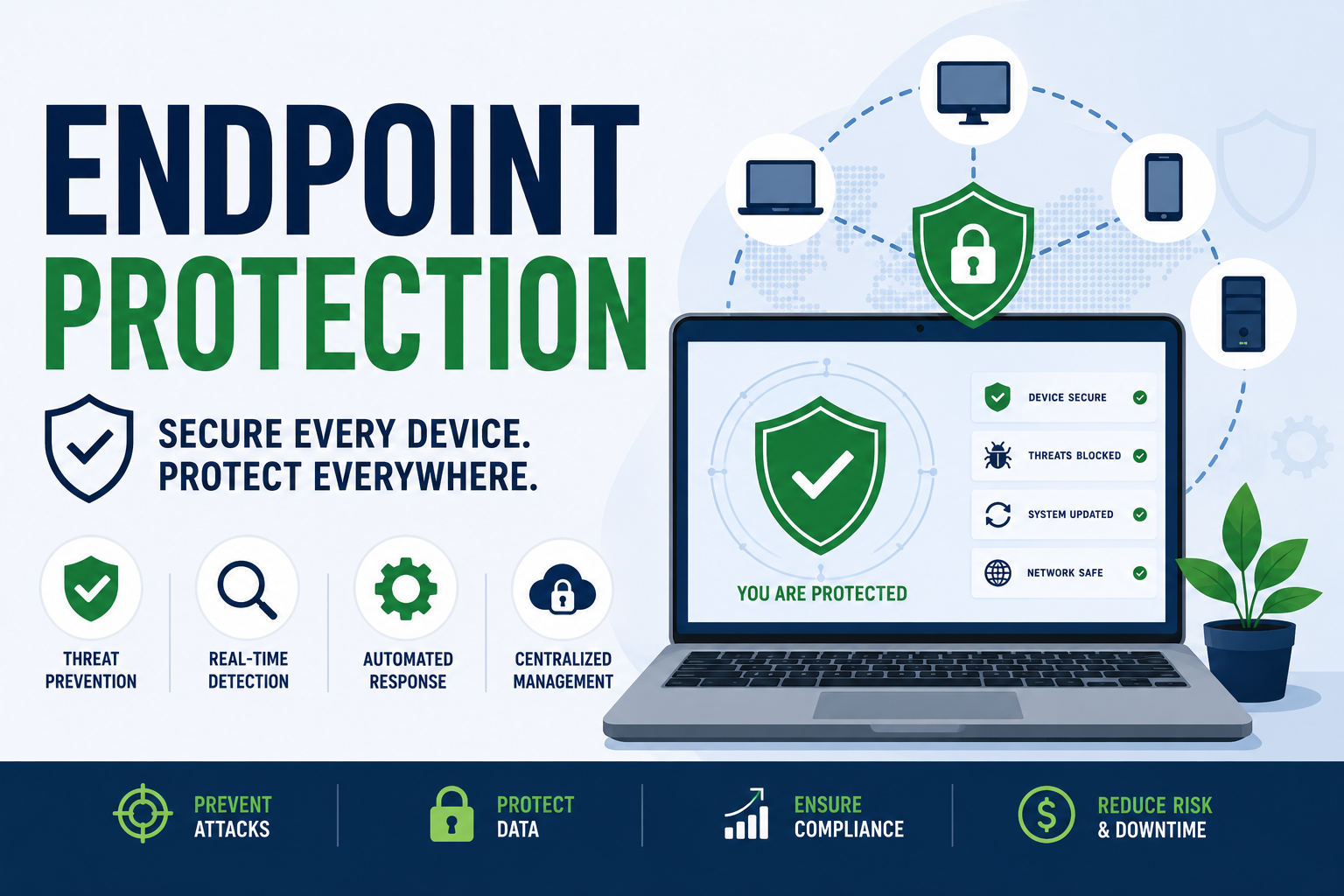
Endpoint protection isn't magic—though getting an alert about a blocked attack can certainly feel like it. It operates through four key stages: prevention, detection, response, and reporting .
1. Threat Prevention
This is the "keep out" sign on your digital lawn. It includes traditional signature-based malware detection, behavioral analysis, and web filtering to stop known and unknown threats (zero-day exploits) from ever reaching the device .
2. Real-Time Detection
When a threat slips past the first line of defense, detection kicks in. Using AI and machine learning, the system monitors for unusual activity—like an employee's laptop suddenly attempting to transfer massive amounts of data at 3 AM, which is rarely a sign of hard work and usually a sign of a problem .
3. Automated Response
This is where endpoint protection earns its keep. When a threat is detected, the system can automatically isolate the compromised device, stop the malicious process, and alert your IT team . Advanced solutions go a step further, potentially rolling back changes to restore the endpoint to a pre-infection state .
4. Reporting and Analytics
Finally, a good platform provides dashboards and reports that give you a bird's-eye view of your security posture. This helps you understand trends, identify vulnerable devices, and prove compliance to regulators—because nothing says "we take security seriously" like a well-organized dashboard .
EPP vs. EDR vs. XDR: The Alphabet Soup of Endpoint Security

One of the most confusing parts of endpoint protection explained to a business owner is the lingo. You'll hear EPP, EDR, and XDR thrown around. Here's a quick breakdown of what these mean and why you might need one or all of them .
| Solution | Purpose | Key Strength |
|---|---|---|
| EPP (Endpoint Protection Platform) | Prevents and detects threats on endpoints | Core defense layer |
| EDR (Endpoint Detection and Response) | Detects, investigates, and responds to advanced threats | Incident response and threat hunting |
| XDR (Extended Detection and Response) | Unifies endpoint, network, and cloud visibility | Cross-domain threat correlation |
Think of EPP as your front-line troops, EDR as the elite special forces that investigate when something goes wrong, and XDR as the general coordinating the entire battlefield across all branches of the military.
Managed Endpoint Protection: The "Set It and (Actually) Forget It" Option
For many US-based SMBs, building an in-house Security Operations Center (SOC) is about as practical as building a rocket to the moon in your backyard. It's expensive, requires specialized talent that's in short supply, and you'd rather focus on growing your business than configuring firewalls. According to a principal analyst, an average of one-third of workplace endpoint devices are unmanaged, and more than half of those are completely invisible and unsecured—a terrifying statistic for any business owner .
This is where managed endpoint protection comes in. You outsource the day-to-day security operations to a team of experts who monitor your systems 24/7, apply patches, and respond to incidents on your behalf. It's like hiring a security firm to patrol your digital building, so you don't have to sleep with one eye on the security camera.
Key Features of Managed Endpoint Protection Services
Not all managed services are created equal, but the best-in-class solutions typically include several core capabilities .
Continuous Monitoring & Real-Time Alerts
Your endpoints are watched around the clock. Machine learning is used to detect unusual user activity or suspicious system calls, and real-time alerts are generated so a human analyst can isolate compromised machines before damage spreads .
Automated Threat Containment
When a threat is confirmed, speed is paramount. Managed providers enable automatic quarantines—blocking processes, isolating network interfaces, or halting malicious executables in their tracks .
Vulnerability & Patch Management
In 2024, the number of CVEs (Common Vulnerabilities and Exposures) disclosed per day averaged 115 . Keeping up with patches is a full-time job. Managed services automate this, scanning for missing patches and orchestrating rapid remediation at scale.
Forensic & Incident Analysis
If a breach does occur, forensic capabilities capture memory dumps, process logs, and system snapshots. Skilled analysts investigate the root cause, infection timeline, and attacker footprints—knowledge you can use to fortify your defenses and, if necessary, survive legal or compliance audits .
Why US SMBs Are Turning to Managed Solutions
The rise of remote work, IoT devices, and complex multi-cloud integrations has turned endpoints into a sprawling threat surface . At the same time, smaller budgets often can't support building a 24/7 SOC. Managed endpoint protection rolls the costs of a top-tier security team into predictable monthly fees, making it a financially viable option for mid-market firms. It also frees you up to focus on strategic goals instead of spending all your time building out security toolsets.
Best Practices for Implementing Endpoint Protection

Even the best technology can be undermined by poor practices. The US Cybersecurity and Infrastructure Security Agency (CISA) emphasizes that implementing a few essential best practices can prevent the majority of breaches .
Start with the Four Essentials
According to CISA, every business should start with these fundamental steps :
- Teach Employees to Avoid Phishing: Phishing tricks employees into opening malicious attachments or sharing sensitive information. Train staff to recognize and report suspicious activity.
- Require Strong Passwords: Strong passwords are a simple but powerful way to block criminals from accessing your accounts.
- Require Multifactor Authentication (MFA): MFA adds an extra layer of security beyond passwords. Require it to make accounts significantly more secure.
- Update Business Software: Outdated software can contain exploitable flaws. Promptly install security updates and patches to keep your systems protected.
Level Up Your Defenses
Once you have the basics down, level up by implementing additional practices :
- Use Logging on Business Systems: Log activity so your team can monitor signs that threat actors may be trying to access your systems.
- Back Up Business Data: Incidents happen, but when you back up critical information, recovery is faster and less stressful.
- Encrypt Business Data: Even if criminals gain access to your files, encryption keeps the information locked and unreadable.
Frequently Asked Questions
What is endpoint protection in simple terms?
Endpoint protection is a cybersecurity solution that protects all devices connected to a network—from laptops and smartphones to servers and IoT devices—from malware, ransomware, and unauthorized access .
How is endpoint protection different from traditional antivirus software?
Traditional antivirus protects individual devices and relies on signature-based detection to catch known threats. Endpoint protection provides a centralized, multi-layered defense across all endpoints in a network, using AI and behavioral analysis to catch advanced threats that haven't been seen before .
Why is endpoint protection important for small businesses?
Small businesses are prime targets for cybercriminals because they often lack robust security. Endpoint protection ensures data security, helps with regulatory compliance, and protects against advanced threats like ransomware and phishing that could otherwise put a small company out of business .
What is the difference between EPP and EDR?
An Endpoint Protection Platform (EPP) focuses on preventing and detecting threats on endpoints. Endpoint Detection and Response (EDR) goes a step further by providing continuous monitoring, advanced investigation tools, and automated response capabilities to hunt for and neutralize threats that have bypassed initial defenses .
Does my business need managed endpoint protection?
If your business doesn't have the resources for a dedicated 24/7 security team, managed endpoint protection is a strong consideration. It provides expert monitoring, automated threat response, and predictable costs, allowing you to protect your business without building an in-house SOC .
Your Next Step: Don't Wait for a Wake-Up Call
Cyber threats are a reality, but business disruption doesn't have to be. Whether you're a five-person startup in Austin or a 200-person manufacturing firm in Ohio, securing your endpoints is one of the most critical investments you can make in your company's future. At Devtaastic, we've seen the cost of "I'll get to it later" security. It's a price tag no one should pay.
We help US businesses cut through the noise. We provide a full range of services, from custom web development to strategic digital marketing, and we understand the security implications of a modern digital presence. We're not just developers or marketers; we're your partners in building a resilient, secure online business.
Ready to stop hoping your endpoints are safe and start knowing they are? Let's talk.
Stop Gambling with Your Business Data
Get a free, no-obligation quote on endpoint protection and security strategy tailored to your US business.
Get a Free QuoteNo pressure. No judgement. Just a conversation with people who get it.