For most growing companies, cyber security feels like an abstract line item—until an uninvited hacker decides to make themselves at home in your database. Calculating the actual cost of a data breach for a small business reveals that the financial damage extends far beyond a temporary IT inconvenience. In the US market, small-to-mid-sized businesses (SMBs) are targeted in over 43% of all cyberattacks, primarily because attackers assume their digital perimeter is guarded by little more than a wish and a default password.
When customer records, credit card credentials, or proprietary business data slip into the dark web, the fallout reaches every corner of your P&L statement. From regulatory fines and forensic investigations to reputational collapse and customer churn, the aftermath can cripple cash flow overnight. Understanding what constitutes a security incident—and knowing exactly how to fortify your web architecture—is no longer optional for modern founders and executive decision-makers.
What Is a Data Breach and How Does It Target Small Businesses?
A data breach occurs when unauthorized individuals gain access to confidential, protected, or sensitive data. This can range from employee Social Security numbers and client payment information to internal source code and proprietary strategic plans. While Hollywood movies depict hooded hackers breaking through complex matrix firewalls, the reality is far more mundane: most security incidents start with an unpatched plugin, a weak database password, or a deceptive phishing email.
Cybercriminals target smaller enterprises deliberately. They recognize that while a Fortune 500 company maintains a round-the-clock Security Operations Center (SOC), a mid-sized e-commerce site or local service provider often relies on outdated software. When an unpatched script lets an attacker inside, your technical team quickly learns that fixing security flaws after a breach occurs is like closing the barn door after the horse has already started a successful tech startup elsewhere.
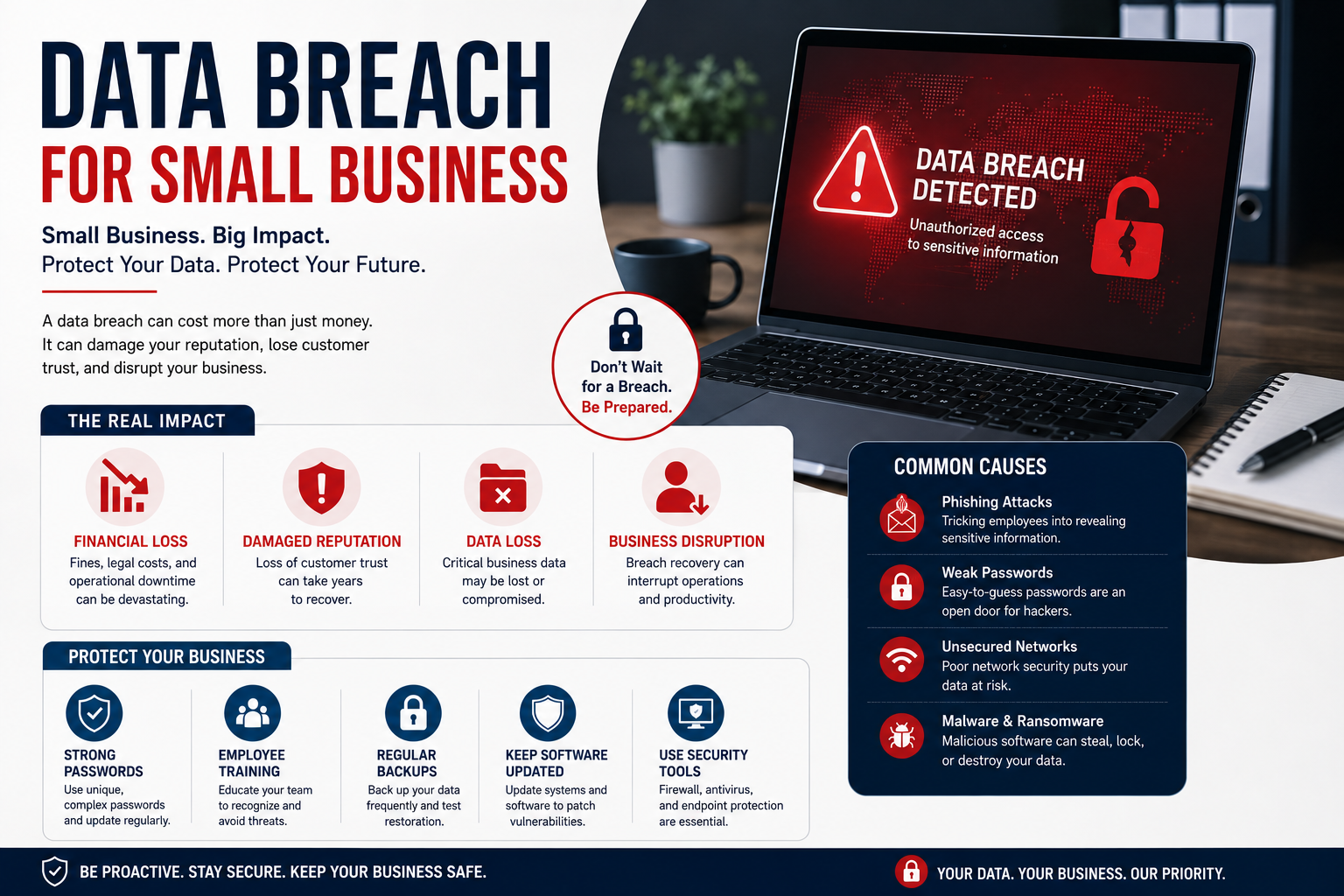
Common vectors through which SMBs suffer data exposure include:
- Vulnerable Web Applications: Legacy CMS platforms, outdated plugins, and unvalidated form inputs invite SQL injections and cross-site scripting (XSS) attacks.
- Phishing & Social Engineering: Employees tricked into giving up administrative credentials by realistic-looking emails—because when hackers phish your staff, they count on someone taking the bait hook, line, and sinker.
- Ransomware: Malicious code that encrypts your core business files and demands hefty payments for the decryption key.
- Insecure Third-Party API Integrations: Connecting your platform to unvetted external services without proper token management or authentication layer defense.

Breaking Down the Real Cost of a Data Breach for a Small Business
According to IBM's Cost of a Data Breach Report, the global average cost of a breach hovers around $4.45 million, but for SMBs in the United States, the average localized incident costs between $120,000 and $3 million. For a mid-market firm operating on tight margins, a sudden $250,000 unexpected expense is not a minor bump in the road—it is a existential crisis.
The total financial weight is divided into four distinct buckets: direct expenses, indirect costs, regulatory penalties, and long-term reputational damage. Evaluating the true cost of a data breach for a small business requires looking beyond immediate ransom demands or IT repair bills.
1. Immediate Direct Expenses
The moment a compromise is detected, the cash drain begins immediately. You must hire digital forensics experts to determine how the breach occurred, isolate infected systems, and stop ongoing data exfiltration. Legal counsel must be retained to ensure compliance with federal and state disclosure laws. Additionally, companies must provide credit monitoring services to affected clients for 12 to 24 months, which adds up rapidly at $10 to $30 per user.
2. Operational Downtime & Lost Revenue
When systems are compromised, operations halt. E-commerce checkout pages go dark, customer service portals freeze, and employees cannot process orders. If your website is offline for three days following an incident, lost sales compound every hour. When building scalable web applications through specialized Web Development Services, integrating automated backups and failover redundancy is essential to keep downtime to an absolute minimum.
3. Regulatory Fines and Compliance Penalties
Depending on your industry and jurisdiction, failing to secure user data triggers significant legal fines. Mandates like HIPAA (for healthcare), PCI-DSS (for payment processing), and state-level regulations like California's CCPA impose severe financial penalties for negligence. While some executives believe hiding behind obscure server settings keeps them safe, you don't need a master's degree in computer science to know that throwing shade won't protect your server when auditors arrive.
4. Reputational Damage & Customer Churn
Reputation takes years to build and seconds to destroy. When clients receive an email stating their financial or personal information was exposed due to your company's security oversight, trust evaporates. Studies indicate that up to 60% of small businesses lose a significant portion of their active customer base within six months of a publicly disclosed cyber incident.

Financial Breakdown Table: Incident Expenses vs. Preventive Defense
Investing in proactively securing your digital infrastructure costs a fraction of cleaning up after a security compromise. Compare the financial realities below:
| Cost Category | Post-Breach Expense (Reactive) | Proactive Security Investment |
|---|---|---|
| Digital Forensics & Legal Counsel | $25,000 – $100,000+ | Included in ongoing security retainer |
| System Repairs & Code Remediation | $15,000 – $75,000 (Emergency rates) | Regular maintenance & security patches |
| Customer Notification & Credit Monitoring | $10,000 – $50,000 | $0 (No breach occurred) |
| Regulatory Fines & Penalties | $5,000 – $250,000+ | $0 (Full compliance audit) |
| User Interface & Trust Recovery | Reputational loss (Unmeasurable) | Optimized via UI/UX Design Services |
When you evaluate the numbers objectively, attempting to save money by delaying web security updates is a high-risk gamble with low odds. If your password policy still permits 'Admin123!', you might as well leave your office doors unlocked and hand out free espresso to every passerby on the street.

How to Shield Your Business: Step-by-Step Security Playbook
Protecting your organization does not require a multi-million-dollar cybersecurity budget. By implementing fundamental security protocols and maintaining clean code standards, you eliminate over 90% of automated web threats.
- Conduct Regular Vulnerability Audits: Scan your website scripts, servers, and connected APIs for known security flaws on a quarterly basis.
- Enforce Multi-Factor Authentication (MFA): Require MFA across all corporate email accounts, hosting portals, content management systems, and staging environments.
- Keep Software and Plugins Updated: Apply security patches immediately upon release. Updating your firewalls after losing customer records is like buying an umbrella after the hurricane has already given your basement a swimming pool.
- Harden Website Code Architecture: Ensure custom web applications use HTTPS encryption, modern sanitization algorithms, and secure database queries.
- Implement Least-Privilege Access Rules: Restrict administrative access so employees only have access to the specific files and systems required for their job role.
- Optimize Digital Marketing Security: Protect your customer funnel and conversion tracking assets by securing user touchpoints built through SEO Services and digital marketing campaigns.
To review our comprehensive suite of software, web development, and digital security solutions, explore our Products Page or return to our Home page to schedule a strategic digital assessment with our senior team.
Frequently Asked Questions
Why are small businesses frequently targeted by cybercriminals?
Small businesses are attractive targets because they often possess valuable data—such as customer payment details and employee records—while lacking the sophisticated cyber defenses of major enterprises. Automated bot networks continuously scan the web for unpatched software, weak passwords, and vulnerable plugins regardless of company size.
What is the average financial cost of a data breach for a small business?
While costs vary depending on industry and company scale, average estimates for SMB data breaches range between $120,000 and $3 million. This total includes digital forensics, legal disclosure fees, system repairs, regulatory fines, and lost sales due to downtime.
Does cyber insurance cover all data breach expenses?
Cyber liability insurance helps mitigate financial losses, but it rarely covers 100% of the damage. Insurance policies often exclude claims resulting from unpatched software, unencrypted databases, or failure to follow basic security guidelines. Furthermore, insurance cannot restore lost brand reputation or customer trust.
How can a custom web development agency help prevent data breaches?
Professional web agencies build custom applications with security embedded into the architecture. This includes implementing robust data encryption, secure API integrations, automated daily backups, SSL certifications, and regular code vulnerability reviews that eliminate security flaws before attackers exploit them.
Protect Your Business with Enterprise-Grade Web Solutions
Don't wait for a security incident to compromise your growth. Connect with Devtaastic today to audit your web application, harden your code architecture, and secure your digital presence.